Korean Bibimbap
Highlighted under: International Inspiration
Korean Bibimbap is a vibrant and nutritious dish that combines a variety of vegetables, rice, and protein, all topped with a delicious gochujang sauce.
Korean Bibimbap is not just a meal; it's a celebration of flavors and colors. Originating from Korea, this dish brings together an array of fresh vegetables, perfectly cooked rice, and a choice of protein, all harmoniously mixed with a spicy gochujang sauce. It's a feast for the eyes and the palate, making it a popular choice for both everyday meals and special occasions.
Why You'll Love This Recipe
- A colorful array of fresh vegetables for a nutritious boost
- Customizable with your favorite proteins and toppings
- Deliciously spicy and savory with gochujang sauce
What is Bibimbap?
Bibimbap is a traditional Korean dish that literally translates to 'mixed rice.' It is known for its colorful presentation, featuring a variety of fresh vegetables, protein, and rice, all topped with a spicy sauce. This dish is not only visually appealing but also offers a delightful combination of flavors and textures, making it a beloved staple in Korean cuisine.
The beauty of bibimbap lies in its versatility. You can customize it based on your preferences or seasonal ingredients. Whether you choose to use beef, chicken, or tofu as your protein source, each variation brings its unique taste to the dish. Furthermore, the array of vegetables can include anything from mushrooms to radishes, allowing you to experiment and find your perfect blend.
Nutritional Benefits
Korean Bibimbap is not just a feast for the eyes; it’s also a powerhouse of nutrition. The dish is packed with vitamins and minerals thanks to the variety of fresh vegetables. Spinach provides iron, while carrots and zucchini add essential vitamins. The inclusion of protein, whether from meat or tofu, ensures a balanced meal that can fuel your day.
Furthermore, the use of gochujang adds a delightful kick while offering health benefits of its own. Made from fermented soybeans, it contains probiotics that promote gut health. The sesame oil used for drizzling is rich in healthy fats, making bibimbap a wholesome choice that satisfies your taste buds and nourishes your body.
Serving Suggestions
When it comes to serving bibimbap, presentation is key. Consider serving it in a stone bowl for an authentic experience, as the heat from the bowl creates a crispy layer of rice at the bottom. This delightful crunch adds an extra layer of texture that elevates the dish. You can also prepare individual bowls for each guest, allowing everyone to customize their bibimbap to their liking.
To enhance the experience, serve your bibimbap with traditional Korean side dishes known as banchan. These can include kimchi, pickled vegetables, or even a refreshing cucumber salad. Pairing bibimbap with these sides not only enriches the meal but introduces diners to the diverse flavors of Korean cuisine.
Ingredients
Gather the following ingredients to prepare your Korean Bibimbap:
Main Ingredients
- 2 cups cooked rice (white or brown)
- 1 cup spinach, sautéed
- 1 cup bean sprouts, blanched
- 1 carrot, julienned
- 1 zucchini, julienned
- 4 eggs (fried or poached)
- 1 cup cooked meat (beef, chicken, or tofu)
- Gochujang (Korean chili paste) to taste
- Sesame oil for drizzling
- Sesame seeds for garnish
Make sure to have all ingredients prepped and ready before you start cooking.
Instructions
Follow these steps to prepare delicious Korean Bibimbap:
Prepare Rice and Vegetables
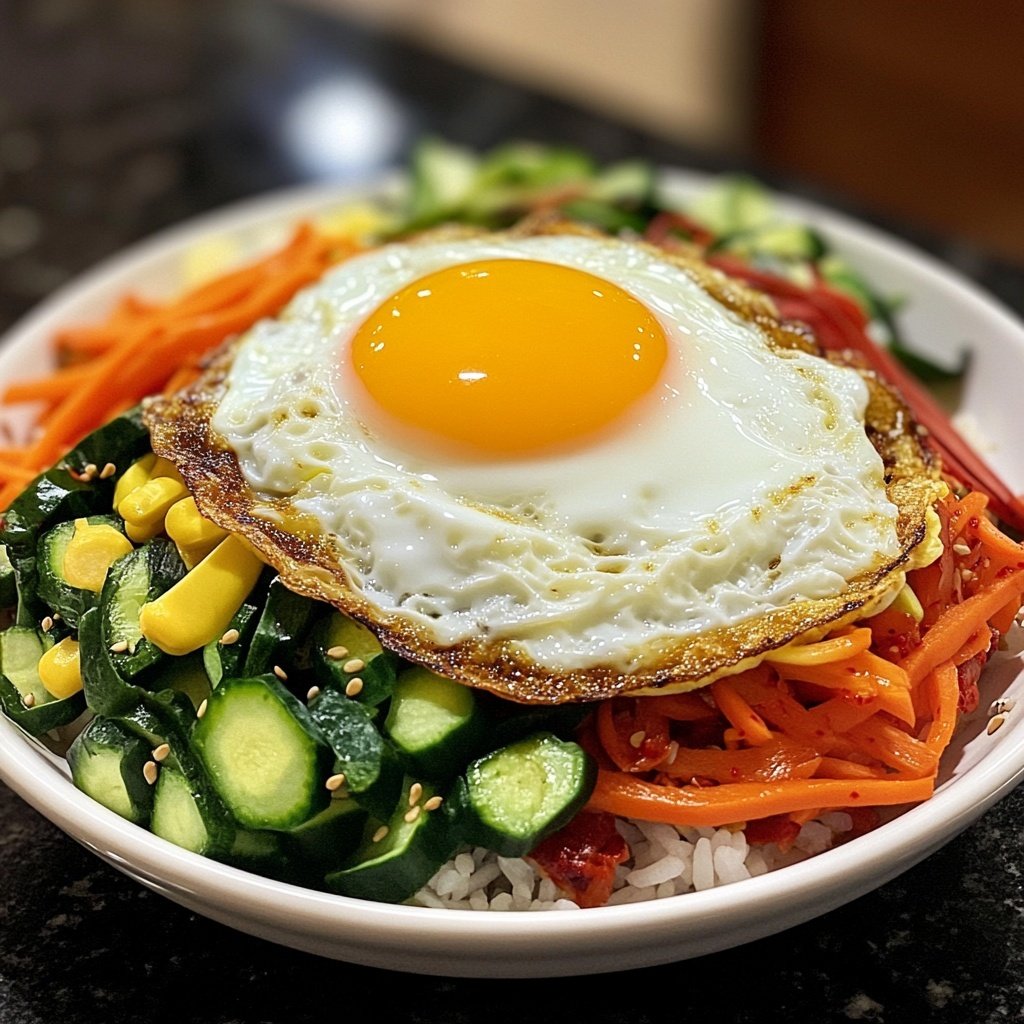
Cook the rice according to package instructions. While the rice is cooking, prepare the vegetables: sauté spinach, blanch bean sprouts, and julienne the carrot and zucchini.
Cook the Protein
If using meat, cook your choice of beef, chicken, or tofu in a skillet until fully cooked. Season as desired.
Fry the Eggs
In a separate pan, fry or poach the eggs to your preference. Sunny side up is recommended for a runny yolk.
Assemble the Bibimbap
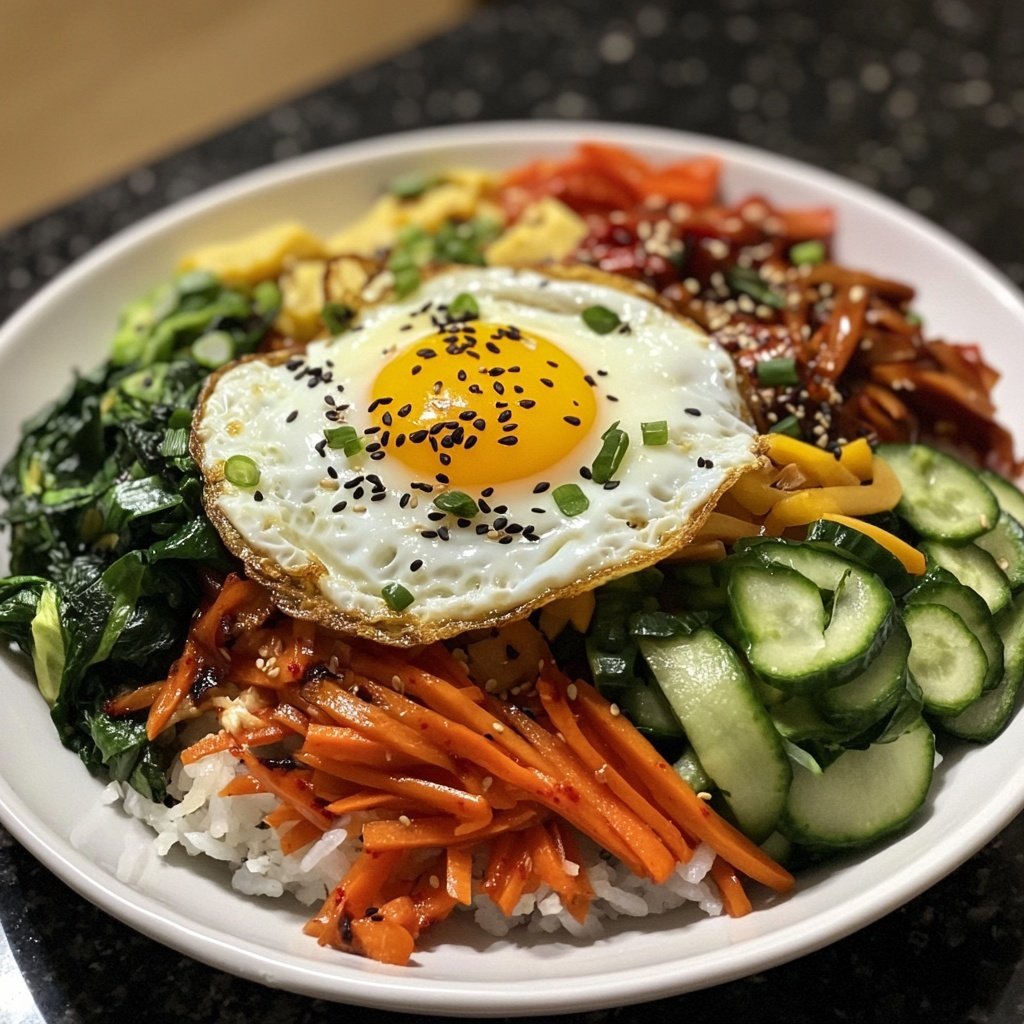
In a large bowl, layer the cooked rice at the bottom. Arrange the sautéed vegetables, cooked protein, and fried egg on top. Drizzle with sesame oil and add gochujang to taste.
Serve
Garnish with sesame seeds and serve immediately. Mix everything together before eating for the best flavor!
Enjoy your homemade Korean Bibimbap!
Pro Tips
- Feel free to customize your Bibimbap with seasonal vegetables or different proteins to suit your taste.
Tips for Perfect Bibimbap
For the perfect bibimbap, make sure to use freshly cooked rice. Day-old rice can be used, but the texture may be less ideal. If using leftover rice, reheat it thoroughly before assembling your dish to ensure a warm and comforting meal.
When preparing your vegetables, try to cook them just until tender while still retaining some crunch. This preserves their vibrant color and nutrients, contributing to the overall appeal of the dish. Each vegetable should shine in flavor and texture, creating a harmonious mix.
Customizing Your Bowl
One of the best aspects of bibimbap is its adaptability. Feel free to get creative with toppings! You can add avocado slices for creaminess or a sprinkle of chopped green onions for a fresh bite. If you enjoy heat, consider adding sliced fresh chilies or a drizzle of chili oil for an extra kick.
For a vegetarian version, enhance the dish with additional proteins like edamame or chickpeas. You can also experiment with different sauces beyond gochujang, such as a soy sauce or a sesame dressing, to create a flavor profile that suits your palate.
Questions About Recipes
→ Can I make Bibimbap vegetarian?
Yes! Simply omit the meat and use tofu or additional vegetables for protein.
→ What is gochujang?
Gochujang is a Korean chili paste made from fermented soybeans, red chili powder, glutinous rice, and salt, adding a unique spicy and savory flavor.
→ Can I prepare Bibimbap in advance?
While it's best enjoyed fresh, you can prepare the components in advance and assemble them just before serving.
→ What can I substitute for sesame oil?
You can use other oils like olive oil, but sesame oil adds a distinct flavor that is integral to Bibimbap.
Korean Bibimbap
Created by: Kerensa Trelawney
Recipe Type: International Inspiration
Skill Level: Intermediate
Final Quantity: 4 servings
What You'll Need
Main Ingredients
- 2 cups cooked rice (white or brown)
- 1 cup spinach, sautéed
- 1 cup bean sprouts, blanched
- 1 carrot, julienned
- 1 zucchini, julienned
- 4 eggs (fried or poached)
- 1 cup cooked meat (beef, chicken, or tofu)
- Gochujang (Korean chili paste) to taste
- Sesame oil for drizzling
- Sesame seeds for garnish
How-To Steps
Cook the rice according to package instructions. While the rice is cooking, prepare the vegetables: sauté spinach, blanch bean sprouts, and julienne the carrot and zucchini.
If using meat, cook your choice of beef, chicken, or tofu in a skillet until fully cooked. Season as desired.
In a separate pan, fry or poach the eggs to your preference. Sunny side up is recommended for a runny yolk.
In a large bowl, layer the cooked rice at the bottom. Arrange the sautéed vegetables, cooked protein, and fried egg on top. Drizzle with sesame oil and add gochujang to taste.
Garnish with sesame seeds and serve immediately. Mix everything together before eating for the best flavor!
Extra Tips
- Feel free to customize your Bibimbap with seasonal vegetables or different proteins to suit your taste.
Nutritional Breakdown (Per Serving)
- Calories: 500 kcal
- Total Fat: 18g
- Saturated Fat: 4g
- Cholesterol: 210mg
- Sodium: 500mg
- Total Carbohydrates: 75g
- Dietary Fiber: 5g
- Sugars: 5g
- Protein: 15g